
Call us now :08045478234
 Send Inquiry
 Send Inquiry
MILK ASEPTIC TANKS
Price 200000 INR/ Piece
MOQ : 1 Piece
MILK ASEPTIC TANKS Specification
- Control Type
- Automatic/Manual options
- Accuracy
- High-precision temperature control
- Display Type
- Digital/Analog as per design
- Features
- Sterile storage, CIP/SIP Compatible, Corrosion resistance, Pressure rated design
- Shape
- Cylindrical/Vertical or Horizontal
- Power Supply
- Electric
- Heating Capacity
- Available as per requirement
- Temperature Resistance
- Up to 150C
- Speed Range
- Variable (with Agitator Option)
- Type
- Aseptic Tank
- Dimension (L*W*H)
- Customized as per requirement
- Equipment Type
- Storage Tank
- Equipment Materials
- Stainless Steel 304/316L
- Power
- 3-5 kW
- Voltage
- 220V/380V
- Material
- High-grade Stainless Steel
- Application
- Dairy, Food Processing
- Capacity (Ltr)
- 500 20,000 Ltr
- Agitator
- Top/Side Mounted (Optional)
- External Finish
- Matt/Satin Finish
- Cleaning System
- Spray Ball for CIP
- Insulation
- PUF/Glass Wool Insulation
- Gaskets/Seals
- Food Grade Silicone
- Pressure Rating
- Atmospheric/Low Pressure
- Mounting Type
- Leg Mounted/Skid Mounted
- Outlet Valve
- Butterfly/Sampling Valve
- Internal Finish
- Mirror Polished
MILK ASEPTIC TANKS Trade Information
- Minimum Order Quantity
- 1 Piece
- Payment Terms
- Cash on Delivery (COD), Cash Advance (CA), Cash in Advance (CID)
- Sample Policy
- Contact us for information regarding our sample policy
- Main Export Market(s)
- Asia, Australia, Central America, North America, South America, Eastern Europe, Western Europe, Middle East, Africa
- Main Domestic Market
- All India
About MILK ASEPTIC TANKS
Milk Aseptic tanks are generally used as a bufferbetween the UHT sterilizer and the aseptic filling machine. These are usefulwhen the capacity of filling machine is lower than the capacity of UHTsterilizer. In this case, the UHT sterilizer can be optimally utilized.
Supplies fully automatic aseptic tanks of capacity upto 30000litres. The tanks are provided with either top or bottom agitators. The inletand outlet could be separate or could be single, as per the process /customers requirement.
Available capacity: Upto 30 KL
Versatile Storage Solutions for Dairy and Food Processing
Designed for excellence, our aseptic tanks are tailored for milk and dairy applications, ensuring hygienic and temperature-stable storage. Choose from leg or skid-mounted models, with optional agitators to support various processing requirements. Every tank is customizable, right from dimensions to heating capacity and power supply, serving needs from small-scale dairies to large food production facilities.
Advanced Materials and Safety Features
Crafted from superior Stainless Steel 304/316L, our tanks resist corrosion and withstand rigorous cleaning. Food-grade silicone seals and a mirror-polished interior prevent product contamination, while state-of-the-art insulation preserves product quality. Pressure-rated construction and customizable safety features make these tanks reliable for sensitive processes requiring sterility and accuracy.
FAQs of MILK ASEPTIC TANKS:
Q: How do aseptic tanks maintain milk quality during storage?
A: Aseptic tanks use a combination of mirror-polished interiors, robust insulation (PUF or glass wool), and airtight, food-grade fittings to prevent contamination and preserve milk freshness. Their precise temperature control and CIP-compatible cleaning systems also ensure high levels of product safety.Q: What options are available for outlet valves and agitators in the MILK ASEPTIC TANKS?
A: Milk aseptic tanks can be fitted with either butterfly or sampling valves for efficient and hygienic product discharge. Optional agitators may be top- or side-mounted, depending on your process requirements, and offer variable speed ranges for customized operation.Q: When should I use a skid-mounted versus a leg-mounted aseptic tank?
A: Skid-mounted tanks are ideal for facilities that need mobility or compact, integrated systems. Leg-mounted tanks are best for fixed installations where stability is crucial. Both mounting types support heavy-duty usage and can be customized for your space and process needs.Q: Where are these stainless steel aseptic tanks typically installed?
A: These tanks are commonly installed in dairy farms, food processing plants, and beverage manufacturing facilities across India and globally. Their corrosion-resistant and sanitary design makes them suitable for central storage and process integration.Q: What is the process for cleaning and sanitizing these aseptic tanks?
A: Each milk aseptic tank comes with an integrated spray ball for Clean-In-Place (CIP) operations. This allows for automated rinsing and sanitizing of all tank surfaces without manual intervention, ensuring hygienic conditions and reducing downtime.Q: How does the insulation improve the usage and efficiency of the aseptic tank?
A: PUF or glass wool insulation minimizes temperature fluctuations, helping maintain the desired milk temperature and reducing energy demands. This ensures product integrity and efficient operation, especially during long storage periods.Q: What are the primary benefits of using MILK ASEPTIC TANKS in food and dairy industries?
A: These tanks guarantee sterile storage, precise temperature control, resistance to corrosion, and compatibility with both CIP and SIP systems. Custom options ensure that each tank meets exact operational requirements, improving safety, efficiency, and overall product quality.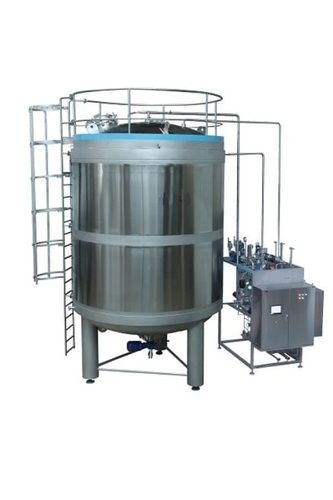
Tell us about your requirement

Price:
Quantity
Select Unit
- 50
- 100
- 200
- 250
- 500
- 1000+
Additional detail
Mobile number
Email

More Products in Dairy Farm Equipment Category



 Send Inquiry
Our Products
- Inverted Microscope
- Microscope
- Stereoscopic Microscope
- Bio Safety Cabinet
- Fume Hood (Ductless)
- Hot Air Oven
- Incubator
- Laminar Flow Cabinet
- Air Sampler
- Grossing Station
- Pass Box
- Lab Equipments
- Deca Head Microscope
- AIR SHOWER
- Laboratory Goods
- Laboratory Furniture
- Surgical Face Mask
- Laboratory & Pharmacy Refrigerator
- Malaria Microscope
- Covid-19 Bio-Safety Cabinet
- LABORATORIES EQUIPMENT
- COMPUTER ASSISTED SEMEN ANALYZER
- STEREOTAXIC APPARATUS
- Engineering Lab Equipment
- Slit Lamp
- OSMOMETER
- Furniture
- MULTI CHANNEL STUDENT PHYSIOGRAPH
- Microwave Digestion/Extractioin System
- Dairy Farm Equipment
- Industrial water filters
- Industrial Water Treatment Plant


Office No.-5337, Punjabi Mohalla, Near B.D.High School,Ambala Cantt - 133001, Haryana, India

 Send Inquiry
 Send SMS
 Call Me Free
Developed and Managed by Infocom Network Private Limited.
